STRIDE-Based Threat Detection
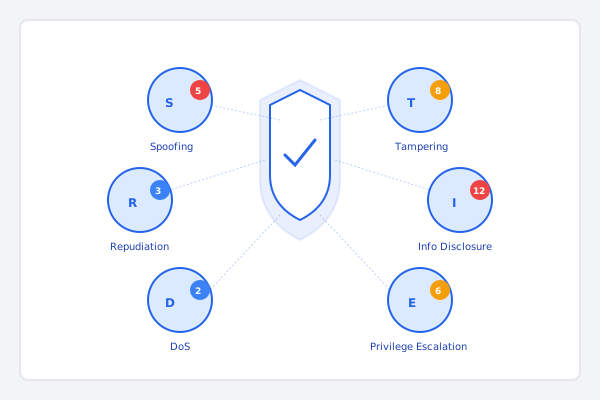
Comprehensive security analysis across all six STRIDE categories. Industry-standard threat modeling framework for Infrastructure as Code.
Identify identity vulnerabilities including missing MFA on admin accounts, weak authentication mechanisms, and unprotected API endpoints.
Detect data integrity risks such as unencrypted storage, missing version control, and unsigned artifacts across your infrastructure.
Find accountability gaps including missing audit logging, insufficient log retention, and inadequate activity monitoring.
Discover confidentiality threats like publicly accessible storage, exposed databases, and unencrypted data at rest.
Detect availability risks including missing rate limits, absent auto-scaling, and single points of failure in your infrastructure.
Identify authorization vulnerabilities such as overly permissive IAM policies and excessive privilege grants.
Industry-Standard Threat Modeling
STRIDE (Spoofing, Tampering, Repudiation, Information Disclosure, Denial of Service, Elevation of Privilege) is Microsoft’s proven threat modeling framework, trusted by security teams worldwide. ThreatMitigator brings this enterprise-grade methodology to Infrastructure as Code.
90+ Built-In Detection Rules
Our comprehensive rule set covers common and critical security vulnerabilities across all major cloud platforms:
Spoofing Threats
- Missing multi-factor authentication on administrative accounts
- Weak password policies and authentication mechanisms
- Unprotected API endpoints without proper identity verification
- Service accounts without rotation policies
- Anonymous access to sensitive resources
Tampering Threats
- Unencrypted storage volumes and databases
- Missing integrity checks on critical data
- Unsigned container images and artifacts
- Absence of versioning on storage systems
- Lack of immutable infrastructure patterns
Repudiation Threats
- Missing CloudTrail, Azure Monitor, or equivalent logging
- Insufficient log retention periods
- Absence of log integrity protection
- Missing activity monitoring for privileged operations
- Inadequate audit trails for compliance requirements
Information Disclosure Threats
- Publicly accessible S3 buckets, Blob storage, or GCS buckets
- Databases exposed to the internet
- Unencrypted data at rest
- Missing encryption in transit
- Exposed secrets in configuration files
- Overly permissive network security groups
Denial of Service Threats
- Missing rate limiting on APIs and endpoints
- Absence of auto-scaling configurations
- Single points of failure in critical systems
- Missing DDoS protection mechanisms
- Inadequate resource quotas and limits
Elevation of Privilege Threats
- Wildcard permissions in IAM policies
- Overly permissive role assignments
- Missing least-privilege enforcement
- Service accounts with excessive permissions
- Cross-account access without proper controls
Detection Accuracy
- Zero false positives from rule-based detection
- Context-aware analysis understanding resource relationships
- Platform-specific validation for accurate cloud provider checks
- Customizable severity levels to match your risk tolerance
Fast and Efficient
- Single resource evaluation: ~112 microseconds
- 10,000 resources analyzed in under 1 second
- Parallel processing for maximum throughput
- Minimal memory footprint
ThreatMitigator’s STRIDE-based approach ensures comprehensive security coverage while maintaining the speed needed for continuous integration workflows.
See it in action
Comprehensive threat detection across all six STRIDE categories with 90+ built-in rules.
Ready to Secure Your Infrastructure?
Join teams already using ThreatMitigator to identify security threats in their Terraform code.