Complete Attack Surface Discovery for Cloud Applications
Scan both Infrastructure as Code and application source code to identify security vulnerabilities before they reach production. STRIDE-based analysis across IaC configurations and 25+ programming languages with optional AI-powered remediation.
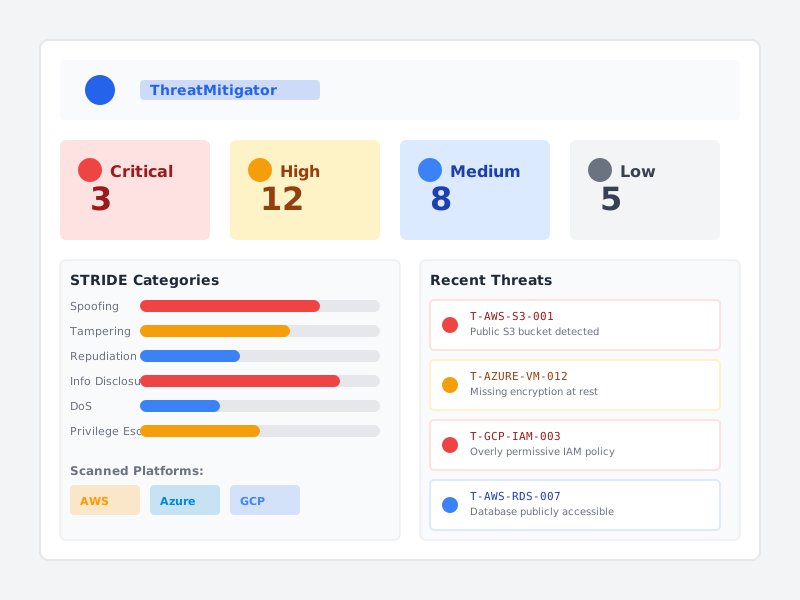
Why ThreatMitigator?
Complete attack surface visibility from infrastructure to application code
Blazing Fast
Scan 10,000 lines of code per second. Analyze entire microservices in under 10 seconds.
Dual Scanning
IaC + source code analysis. Find threats in both infrastructure and application layers.
25+ Languages
JavaScript, Python, Java, C#, Go, Rust, and 20+ more languages supported.
Multi-Cloud
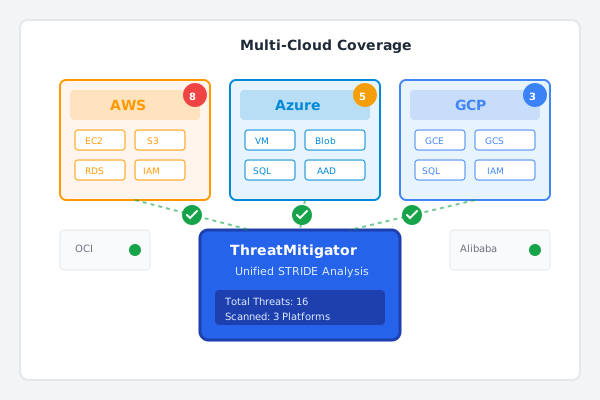
Single tool for AWS, Azure, GCP, OCI, and Alibaba Cloud.
Enterprise-Grade Threat Detection
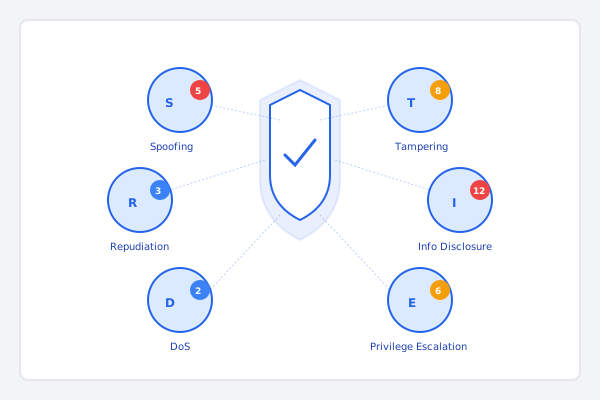
Comprehensive security analysis across all six STRIDE categories
STRIDE-Based Detection
Industry-standard threat modeling framework identifying vulnerabilities across Spoofing, Tampering, Repudiation, Information Disclosure, Denial of Service, and Elevation of Privilege.
- 6 STRIDE categories
- 90+ detection rules
- Multi-cloud coverage
- Platform-specific checks
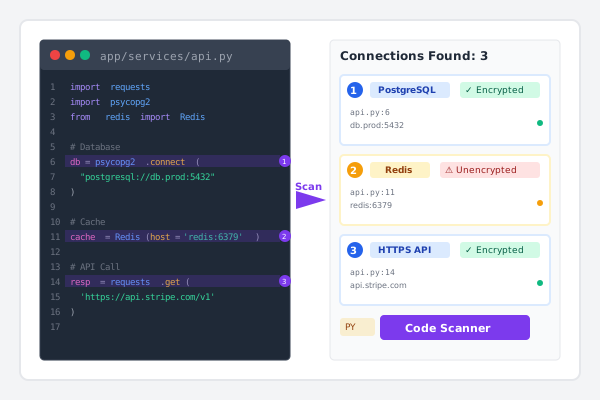
Connectivity Scanner
Automatically discover connections in your source code that aren't visible in IaC—databases, APIs, message queues, cloud services, and authentication systems. Scan 25+ languages to find hidden attack surfaces.
- 25+ languages
- Database & API detection
- Encryption status
- Protocol classification
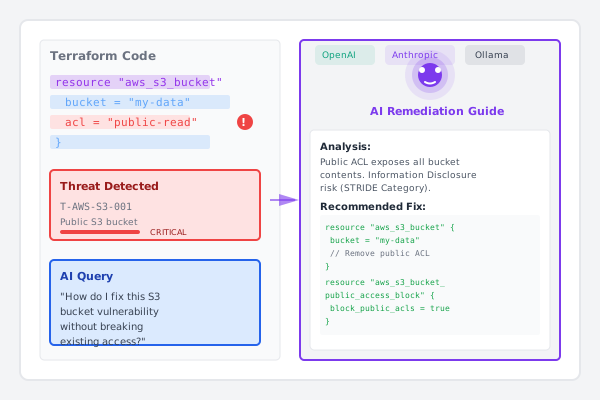
AI-Powered Analysis
Optional LLM integration for context-aware remediation recommendations. Supports OpenAI, Anthropic Claude, and local Ollama models. Your API keys, your control.
- GPT-4o & Claude Sonnet
- Local Ollama support
- Smart remediation
- Interactive queries
Multi-Cloud Support
Single tool coverage across AWS, Azure, GCP, Oracle Cloud, and Alibaba Cloud. Platform-specific resource mappings ensure accurate threat detection.
- AWS & Azure
- GCP & OCI
- Alibaba Cloud
- Unified analysis
How It Works
From initialization to continuous monitoring in five simple steps
Initialize
Set up threat tracking in your repository
threatmitigator initScan
Analyze IaC and source code for threats
threatmitigator scanReview
Examine threats with severity ratings
Remediate
Get AI-powered fix guidance (optional)
threatmitigator queryTrack
Monitor security posture over time
Flexible Output Formats
Export results in the format that fits your workflow
JSON
Machine-readable for tooling integration and automation pipelines
YAML
Human-readable with Git-friendly diffs for version control
SARIF
Industry-standard format for code scanning and IDE integration
Markdown
Documentation-ready reports for wikis and executive summaries
Security & Privacy First
Your infrastructure data stays under your control
Local-First Architecture
All analysis runs locally. No infrastructure data is transmitted to ThreatMitigator servers.
Bring Your Own LLM
AI features use your API keys with your chosen provider. You control where data is sent.
Secure Defaults
Report files with restricted permissions, automatic secret redaction, safe HCL parsing with no code execution.
Input Validation
Git URL validation, path traversal protection, and input sanitization throughout.
Ready to Secure Your Infrastructure?
Join teams already using ThreatMitigator to identify security threats in their Terraform code.